
Conservatory Roof ReplacementReadingGet a quote

Conservatory Roof Replacement Reading

Turn the room you avoid from June to February into one you actually sit in, with a new tiled, glass or polycarbonate roof.

Reading has 15 conservation areas, so how the new roof looks can matter here.

A red narrowboat moored on a still canal, with weeping willows, an old brick works chimney and autumn trees reflected in the water

Price your Reading roof

We are an independent introducer. You learn which Reading-area roof specialist we have picked before anything about you is shared, and you never pay us.

Postcode and how to reach you

What your house is made of, and why the roof should notice

Most people choose a conservatory roof by looking at the conservatory. In Reading it pays to look up at the house first, because the town has a strong look of its own and a solid roof is a large new surface right beside it.

The council's appraisal of the Redlands area, the Victorian streets that grew up after the railway came, describes it in some detail. You may recognise your own road.

  • Patterned brick

    Grey, cream and red brick laid together: grey with red and cream detail on Marlborough Avenue, plain red with grey bands on New Road. A dark grey tile tends to sit more quietly against it than a bright one.

  • Low-pitched slate

    Shallow slate roofs are the norm on these villas. A slate-grey lightweight tile is the natural partner, and a shallow conservatory pitch avoids fighting the main roof line.

  • Red clay tiles

    Some pairs on Marlborough Avenue and Elmhurst Road wear red clay tiles in an Old English Revival style. Here a warmer red-brown finish usually looks more at home.

Which roof, honestly?

Ask what the room is for before you ask what the roof costs. Is it the light you love, or would you rather sit out there in midwinter?

Tiled solid warm roof

Insulation sits inside the roof itself, with lightweight tiles outside and plaster on the room side. It is the quietest in heavy rain and the one most likely to make the room usable all year. It is also the heaviest, so the frame is checked before anyone quotes properly.
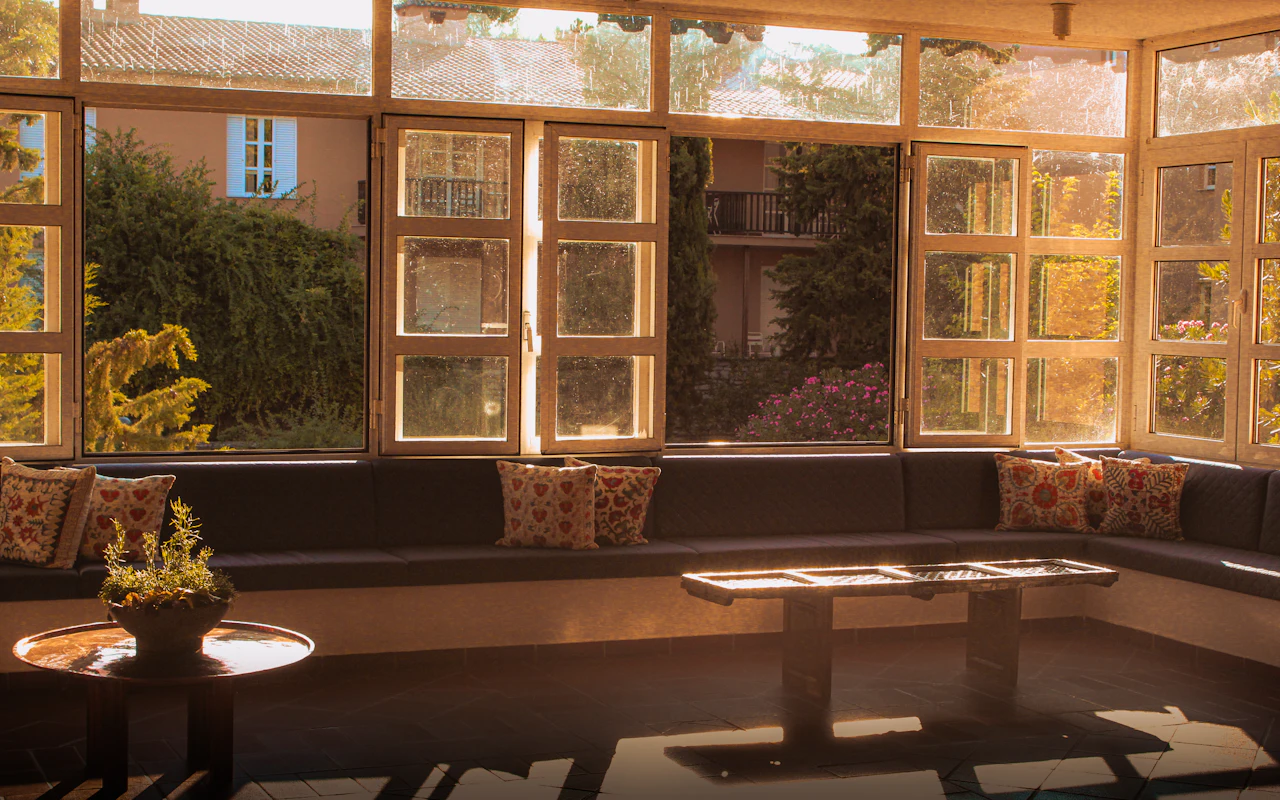
A sunroom lined with tall glazed panels and a long cushioned bench seat, low evening sun throwing window shadows across the tiled floor

A glazed roof, done properly this time

If light is the reason you built a conservatory, keep it. Coated glass units cut glare and summer heat far better than the panels most older rooms were built with, and the frame usually copes with the weight.

Reading prices for a medium glass roof tend to begin near £4,200. A guide, not a quote.

Polycarbonate, renewed in the old bars

New multiwall sheets slot into your existing glazing bars. This is the lightest load and the smallest outlay, and it suits a room you mainly use in spring and autumn. Do not expect it to solve real summer heat.

That glass figure uses our own rough South East estimate. See tiled and polycarbonate prices, every size and the calculator on the cost page, or read the full comparison of roof types.

Tape measure to inspector: how a Reading job unfolds

The days on site are often fewer than people fear. The real waiting tends to come earlier, while the survey and any paperwork get done.

  1. Someone looks at the frame

    Before any price is fixed, a surveyor climbs up, measures and checks whether the posts, the door openings and the dwarf wall can carry the roof you have in mind. A heavier roof on a weak frame is the one mistake you cannot undo cheaply.

  2. Approval, if you go solid

    Tiles mean building control. The firm usually sends the application.

  3. Stripping off and building back

    The old sheets or glass come away, then the new structure, insulation and covering are fitted. Move anything precious out of the room first, because dust gets everywhere.

  4. Ceiling, lights, sign-off

    A solid roof gets a plastered ceiling and any lighting, then an inspector signs it off.

Reading roof questions, answered plainly

Will a new roof stop my Reading conservatory being unbearable in July?

A tiled, insulated roof makes the biggest difference, because the sun no longer comes straight through the top. Modern solar-control glass helps too, though less so. New polycarbonate on its own rarely fixes a room that overheats.

Do I need permission to change the roof?

Planning permission is seldom needed for a straight replacement, but a solid roof normally does need building regulations approval. Listed homes, flats and the town's conservation areas are where it gets more involved. The Reading regulations page explains why.

How do I know if my frame can take tiles?

You will not know from looking, and neither will a salesperson on the phone. A proper survey checks the frame, the corner posts and the base, and some rooms need extra posts fitted before a solid roof is safe.

Is it better to replace the roof or the whole conservatory?

If the walls, the frames and the base are still sound, the roof alone is usually the part letting you down. Where frames have rotted or the base has moved, starting over can be the better use of money.

Can the tiles match my house in Reading?

Often, yes. Lightweight tiled systems are made in more than one colour, so ask to see grey and red-brown options and pick the one that sits best beside your slate or clay roof. Take a photo of your main roof to the survey.

Who sorts out the council paperwork?

Many roof firms handle the application and add the council fee to the bill. Some firms leave it to you. Ask which way it works before you sign, and see the Reading roof costs page for the roof itself.

£781.00

Reading's building control charge, in one figure

That is Reading Borough Council's published full plans fee for an extension under 10 m², the line closest to a solid conservatory roof. See how it compares with the councils around Reading.

Planning or building control?

Usually the second, not the first: a solid roof stops the room counting as an exempt conservatory, so Reading Borough Council or a registered approver has to sign it off. Read the Reading regulations guide.

Slate next door, tiles on top

Low-pitched slate is typical of Reading's Victorian streets. Get a price for a conservatory roof that suits the house it is joined to.

Get a quote
Get a quote